Company powers every step of desalination process

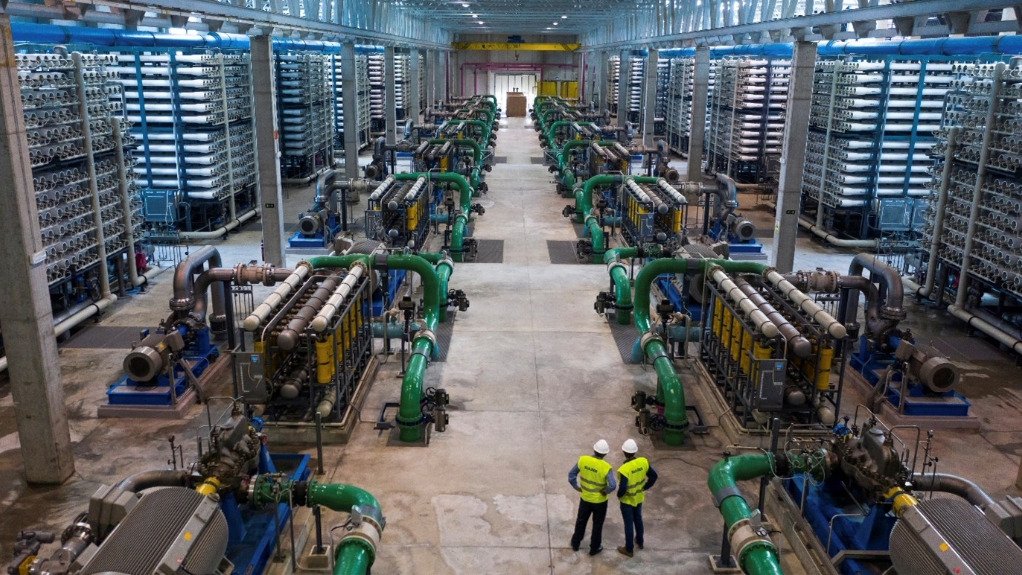
FRESHWATER UNDER STRAIN Desalination is accelerating worldwide as climate change, population growth and industrial demand push water stress to critical levels, with advanced reverse osmosis systems emerging as a key technology to supply reliable, scalable freshwater where traditional sources can no longer keep pace


With climate change intensifying droughts and reducing freshwater availability, population growth placing increasing pressure on existing resources, and industrial demands pushing water consumption to new heights, global water scarcity has emerged “as one of the most pressing challenges of our time” says industrial engineering and manufacturing firm Sulzer desalination infrastructure sales head Antonio de la Torre.
De la Torre cites a 2024 UN report, which notes that roughly half of the global population experiences severe water scarcity for at least part of the year, with around a quarter facing “extremely high” levels of water stress. For many regions, traditional freshwater sources are no longer sufficient to meet the needs of growing communities and economies.
Desalination – the process of converting sea water into fresh water – has, therefore, become an essential solution to help tackle this problem. Consequently, the global desalination market is now expanding at a rate of more than 9% a year, with demand projected to grow significantly, driven by the urgent needs of water-scarce regions such as the Middle East, North Africa and parts of Asia.
There are several different desalination technologies available, but over recent years reverse osmosis (RO) has become the most widely adopted method worldwide, De la Torre says. By forcing sea water through semi-permeable membranes, RO desalination provides an effective and scalable solution capable of delivering millions of litres of fresh water every day. Its flexibility makes it suitable for both large-scale municipal plants and smaller industrial applications.
However, despite decades of incremental improvements making RO more efficient than ever, it is undeniable that it is still an energy-intensive activity. For the operators of these plants, efficient, reliable high-pressure pumps and process equipment play a crucial role in minimising energy consumption and the final cost of the supplied water.
The Desalination Journey
The route from sea water to fresh water in a RO plant is a “sophisticated, multi-stage process” that relies on advanced engineering to ensure efficiency, reliability and environmental sustainability, De la Torre comments.
“At every step, Sulzer plays a pivotal role, offering tailored products and services that optimise the entire process from intake to distribution.”
The first step in the desalination process involves drawing sea water from the ocean through carefully designed intake structures. The efficiency and reliability of this initial stage are critical, as any disruptions can cause costly operational issues.
Sulzer supplies a range of high-efficiency pumps specifically designed for seawater intake in RO applications. The key products include vertical turbine pumps and axially-split case pumps, each tailored to meet different requirements.
These pumps are engineered to withstand the harsh marine environment and continuous operation under demanding conditions. They are constructed from corrosion-resistant materials that provide resistance to chloride-induced corrosion and biofouling, reducing the need for replacements and maintenance.
Once the sea water enters the plant, it undergoes pre-treatment to remove suspended solids, sand, biological materials and other impurities that could damage or clog the RO membranes. Effective pre-treatment not only protects the membranes but also enhances the overall efficiency of the desalination process.
Throughout the pre-treatment process, the pumps maintain optimal flow rates at required pressure and efficiency, ensuring continuous and stable operation.
RO
Once the sea water has been pre-treated, it enters the actual RO stage. In this phase, sea water is pressurised and forced through semi-permeable membranes that separate salts from the water.
The membranes allow only water molecules to pass through, while the remaining concentrated brine is discharged for safe disposal.
Sulzer helps optimise this phase by supplying high-pressure feed pumps. These are engineered to deliver the consistent, high-pressure flow required to push sea water through the RO membranes and typically account for more than half of a desalination plant’s power consumption.
In some desalination plants, a second pass of RO membranes is introduced to further refine the quality of the final product. To support this, Sulzer supplies dedicated second pass pumps, designed for this additional phase.
Moreover, Sulzer can supply booster pumps to help integrate energy recovery devices (ERDs) into the RO process to significantly improve energy efficiency. ERDs capture the hydraulic energy from the high-pressure brine reject stream and transfer it back to the membrane feed stream.
After the RO membranes have filtered out the salts and impurities, the water enters a post-treatment phase, incorporating remineralisation, to help balance the water’s composition, making it safer, more stable and improving its taste .
Sulzer’s Comprehensive Solutions
Many companies supply individual pieces of equipment for desalination, but Sulzer stands apart as a full-line supplier – offering everything from intake to distribution. With a seamlessly integrated portfolio of pumps, filters, mixers and maintenance services, Sulzer ensures that every stage of the desalination process works efficiently and reliably together.
“Few companies can match [Sulzer’s] ability to deliver a complete, end-to-end solution for desalination plants.”
In addition to its equipment portfolio, Sulzer provides a range of support services that help plants maintain peak performance over the long term. The company notes that long-term service agreements are available for critical equipment such as high-pressure and booster pumps, covering scheduled yearly maintenance and offering rapid field service response, depending on site location and technical needs.
Sulzer also assists with retrofit projects, particularly as more operators replace maintenance-heavy Pelton turbines with modern, energy-efficient ERDs.
The company notes that it has been a trusted partner in the sector for decades, and its technology helps produce over 20-billion litres of fresh water every single day. Each project brings new insights, allowing Sulzer’s teams to continuously refine and improve their solutions.
Desalination is constantly evolving, with each new project pushing the boundaries of efficiency, reliability, and scale. “As a long-time partner to the sector, Sulzer is proud to play a role in that progress – helping plants run more efficiently, last longer and deliver more fresh water to the people who need it.”
Article Enquiry
Email Article
Save Article
Feedback
To advertise email advertising@creamermedia.co.za or click here
Research Reports

Projects
Latest Multimedia


Latest News
Showroom

Columbus Stainless, based in Middelburg, Mpumalanga, is Africa’s only producer of stainless steel flat products. In addition, Columbus is the only...
VISIT SHOWROOM
M and J Mining are leading suppliers of physical support systems as used by the underground mining industry. Our selection of products are not...
VISIT SHOWROOM

Announcements
What's On
Subscribe to improve your user experience...
Option 1 (equivalent of R125 a month):
Receive a weekly copy of Creamer Media's Engineering News & Mining Weekly magazine
(print copy for those in South Africa and e-magazine for those outside of South Africa)
Receive daily email newsletters
Access to full search results
Access archive of magazine back copies
Access to Projects in Progress
Access to ONE Research Report of your choice in PDF format
Option 2 (equivalent of R375 a month):
All benefits from Option 1
PLUS
Access to Creamer Media's Research Channel Africa for ALL Research Reports, in PDF format, on various industrial and mining sectors
including Electricity; Water; Energy Transition; Hydrogen; Roads, Rail and Ports; Coal; Gold; Platinum; Battery Metals; etc.
Already a subscriber?
Forgotten your password?
Receive weekly copy of Creamer Media's Engineering News & Mining Weekly magazine (print copy for those in South Africa and e-magazine for those outside of South Africa)
➕
Recieve daily email newsletters
➕
Access to full search results
➕
Access archive of magazine back copies
➕
Access to Projects in Progress
➕
Access to ONE Research Report of your choice in PDF format
RESEARCH CHANNEL AFRICA
R4500 (equivalent of R375 a month)
SUBSCRIBEAll benefits from Option 1
➕
Access to Creamer Media's Research Channel Africa for ALL Research Reports on various industrial and mining sectors, in PDF format, including on:
Electricity
➕
Water
➕
Energy Transition
➕
Hydrogen
➕
Roads, Rail and Ports
➕
Coal
➕
Gold
➕
Platinum
➕
Battery Metals
➕
etc.
Receive all benefits from Option 1 or Option 2 delivered to numerous people at your company
➕
Multiple User names and Passwords for simultaneous log-ins
➕
Intranet integration access to all in your organisation